
The Muslim Atlantic isn’t a fixed thing: It’s what we make it.
In this IGTV film, presenter Nadir Nahdi explores the different lived experiences of American and British Muslims and how these are part of making the Muslim Atlantic.
This short film features interviews with @chairuqie, Hakim Ali, @aloosh05, @moeedmajeed, @kifashah, and @thawabi. It was supported by the Muslim Atlantic Project.
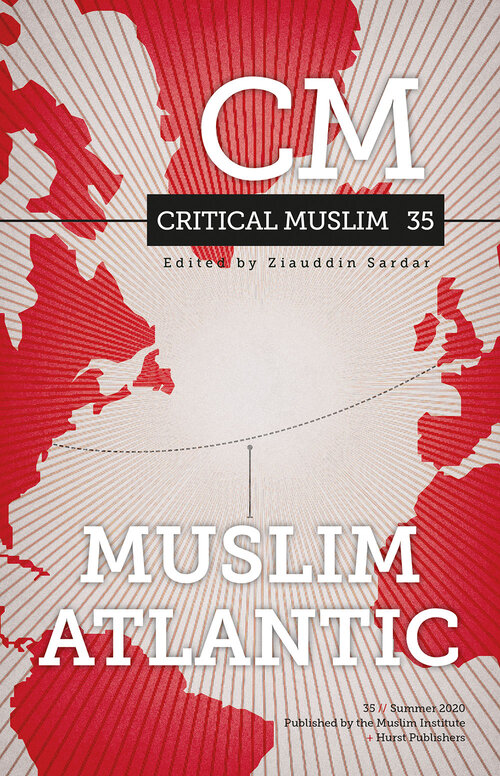
This issue of Critical Muslim considers the idea of a ‘Muslim Atlantic’ by looking at transatlantic connections between Muslims. Inspired by Paul Gilroy’s work on the ‘Black Atlantic’, the issue includes essays, photography, drama, and more on issues of race, gender, security, and popular culture.
Critical Muslim is a literary magazine edited by Ziauddin Sardar. The ‘Muslim Atlantic’ project co-investigators Daniel Nilsson DeHanas and Peter Mandaville served as guest curators for a portion of this issue.
Visit the links below to explore!
What Is the Muslim Atlantic? Daniel Nilsson DeHanas & Peter Mandaville
Realising a Muslim Atlantic Aisha Khan
Return to Almadies Amandla Thomas-Johnson
Closed Minds Ahmed Younis
The Muslim International Sohail Daulatzai
Traveller Zahrah Nesbitt-Ahmed
White Muslim, Black Muslim Juliette Galonnier
Dangerous Ideas Abdul-Rehman Malik
Black Radicalism Rasul Miller
Security Shirin Khan
Back to Bristol Tanya Muneera Williams
Echoes across the Pond C Scott Jordan
Black Female Muslim Emcees Aina Khan
American Griot [play excerpt] Reginald Edmund & Ronnie Malley
Malcolm X Still Speaks: Nine Quotes Kayla Renée Wheeler
More content including fiction, poetry, and book reviews in the full issue:
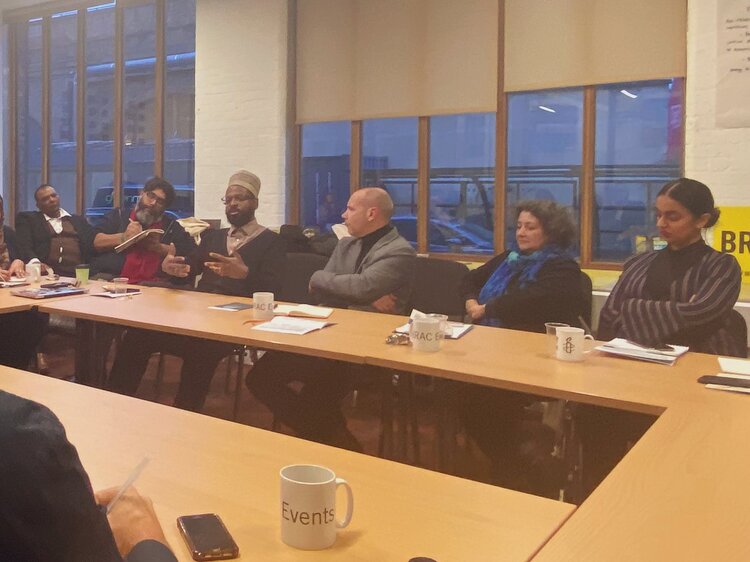
The second Muslim Atlantic workshop sessions were held at the British Islam Conference in London, in February 2020. These sessions focused on debates about 'race and securitization in the Muslim Atlantic' centering discussions on the current contexts of the Muslim Atlantic in the Trump/Johnson era, historical lineages traced from Malcolm X, and how policy is shaped in these securitized transatlantic contexts.
Seeking to replicate the fruitful debates of the previous workshop, these sessions also operated on an open roundtable basis where we invited academics, artists, activists, and journalists from the US and UK to speak alongside members of the public and other conference attendees. As with the previous workshop, we invited a set of contributors to start the discussions: Dr. Rasul Miller, Abdul-Rehman Malik, and Sughra Ahmed attended from the US, and Aina Khan, Muneera Williams, and Dr. Aisha Phoenix represented UK perspectives.
This workshop opened with impassioned spoken word performance by poet and activist Muneera Williams-from the hip-hop duo Poetic Pilgrimage—who mapped black Muslim experience in a highly personal exploration of her upbringing in Bristol, England. The performance laid bare the permanent physical presence of traumatic black history in Bristol's street names. civic buildings and townhouses, built with wealth accumulated from the Atlantic slave trade. In the light of recent events, with the dramatic toppling of slaveholder Edward Colston's statue in Bristol as a part of the Black lives Matter protests, this intervention was timely and poignant and positions the Muslim Atlantic in these debates about racial disparity and persistent social injustice.
Further conversations touched on historical explorations of the role of the 'radical' tradition in black Muslim history in America. Rooting the origins of the Muslim Atlantic world in the intersection of Islamic history and racialized constructs which formed the basis of the slave trade and Atlantic economies. Tracing developments of the black radical tradition from Marcus Garvey in the 1920s through to the Nation of Islam, there was an emphasis on the importance of Muslim internationalist ideologies. There was the acknowledgement of Malcolm X as a significant figure at the intersection of blackness and Muslimness, a beacon of the radical tradition who was a source of unity in the past and could be taken up again now amidst the social upheavals we are experiencing now.
Securitization of Muslims was a major focus of these sessions. The anti-immigrant policies and rhetoric of the Trump and Johnson administrations were seen in the workshop as a continuation of the global 'War on Terror' paradigm that has singled out Muslims as peculiarly dangerous. Participants raised concerns about the sustained emotional impact of Muslims being seen as a 'suspect community' under the eye of counter-extremist policies, namely, Countering Violent Extremism (US) and Prevent (UK). Significant focus was placed on how black Muslims experience securitization differently than other Muslims, particularly in the US context where the surveillance and targeting of groups like the Nation of Islam continue to have a problematic legacy today.
The questions raised and discussed in these sessions confirmed there is much we can learn from transatlantic dialogues. The sessions culminated with practical steps to take forward which will be detailed in our second and final report.